 Google AI
 ChatGPT
 Perplexity
A BRRRR loan is really two loans. A short bridge or hard money loan buys the home. It also pays for repairs. A long rental loan then pays it off. You get your cash back. The plan works when the new loan covers your total cost.
Need a fast answer on your deal? Talk to our team. Call us today at (844) 448-9900.
Why are investors turning to BRRRR now?
Renters are under strain. Harvard found that 22.7 million renter households were cost burdened in 2024. That is 49% of all renters.
Buying is just as hard. Median new and existing home prices are both over $400,000. A payment on a median home hit about $3,100 by late 2025. Many people stay renters. Good rentals stay in demand.
Here is a common myth. The Census Bureau counted 15.8 million vacant homes in the third quarter of 2026. Only about 4.9 million were for sale or for rent. The rest are seasonal, held off the market, or sold. You still need to hunt for the right deal.
What is the BRRRR method?
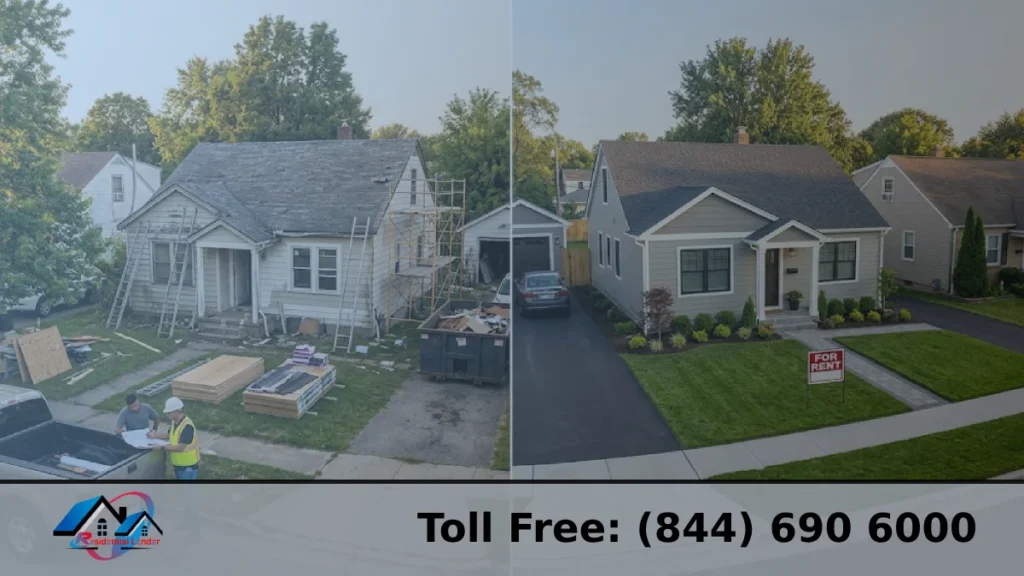
BRRRR means Buy, Rehab, Rent, Refinance, Repeat. You buy a run-down home below market value. You fix it to raise its value. You rent it to a tenant. You refinance into a long loan. Then you use the cash for your next deal.
The big win is simple. You reuse the same money. You do not save a fresh down payment each time. You also add value by fixing the home, so you do not wait on the market.
How do you finance the buy and the rehab?
Banks rarely fund homes with leaky roofs. So investors use short loans. These lenders look at the value after repairs. They care less about your tax returns.
Hard money loans fit fast house rehabs. They often close in ten days. Bridge loans fit big rehabs and small apartment buildings.
| Feature | Hard money loan | Bridge loan |
| Best for | Fast single-family rehabs | Larger rehabs, small apartments, longer timelines |
| Approval focus | Value after repairs | Your track record and property equity |
| Typical funding | Up to 90% of price, plus 100% of rehab | Up to 85% of total cost |
| Loan cap | 65% to 70% of finished value | 70% to 75% of finished value |
| Typical term | 6 to 18 months | 12 to 36 months |
| Payments | Interest only | Interest only |
These are typical ranges. Each lender sets its own. Our bridge and fix and flip programs for houses show base rates of 9% to 12%. They fund up to 90% of cost and up to 70% of finished value. Minimum scores start at 580 to 620. Terms vary.
How do you size a rehab loan?
Run three checks. Loan to cost is the share of price and repairs the lender funds. It is often 80% to 90%. Loan to value caps your debt. It is often 65% to 75% of the finished value. An interest reserve is cash set aside to pay interest during the work.
Then use the 70% rule. Take the finished value. Multiply it by 70%. Subtract your repair costs. That is your top price. For a $350,000 home with $50,000 of repairs, that price is $195,000.
How do you turn the rehab into rent?
Lease the home fast. Lenders want proof of steady rent. Many use the lower of your lease or the market rent.
Screen tenants with clear rules. A common rule is income of three times the rent. Check rent history, job status, and background. Use the same rules for every applicant. Sign a 12-month lease.
What is DSCR and why does it matter?
DSCR means debt service coverage ratio. It compares rent to the monthly loan payment, taxes, insurance, and dues. Lenders call that total PITIA. Investopedia explains the ratio in more detail.
The formula is simple. Divide monthly rent by monthly PITIA. If rent is $2,000 and PITIA is $1,500, your DSCR is 1.33. Many lenders want 1.0 to 1.25. Some accept less if you take a higher rate.
What are the refinance rules?
| Rule | Bank loan | DSCR loan |
| Qualify with | Income and tax returns | Property rent |
| Waiting period | 6 months of ownership; old mortgage 12 months | Often 0 to 6 months |
| Max cash-out | 75% for one unit, 70% for two to four | Often up to 75% |
| Credit score | Often 620 or more | Often 660 or more |
| Title | Your name | LLC often allowed |
Bank loans use your income and tax returns. Fannie Mae wants you to own the home for six months. An old mortgage must be 12 months old. Cash buyers may use a delayed rule. Fannie Mae also caps you at 10 financed homes.
DSCR loans use the rent instead. Many lenders allow a refinance in zero to six months. Ask if they use the appraisal or your cost. Early refinances may use cost. Expect to show three to six months of savings.
Our house term loans show base rates of 7% to 9%. Cash-out goes up to 75%. The minimum score starts at 660. Terms vary.
What does a real BRRRR deal look like?
| Step | Amount |
| Purchase price | $180,000 |
| Rehab budget | $50,000 |
| Carrying costs and fees | $15,000 |
| Total cost (70% of value) | $245,000 |
| New appraised value | $350,000 |
| New loan at 75% | $262,500 |
| Refinance fees (about 2%) | $5,250 |
| Cash back after costs | $12,250 |
Use this test. Add your total cost and refinance fees. Subtract the new loan. If the answer is zero or less, you got all your cash back.
Now check the rent. Say the rate is 7.25%. The loan payment is about $1,791. Add taxes and insurance. PITIA is near $2,260. Rent of $2,260 gives a DSCR of 1.0. Rent of $2,710 gives 1.2. The median asking rent for vacant rentals is $1,541. So pick markets where rent is high next to price.
What happens if the appraisal comes in low?
Say the home appraises at $320,000. A 75% loan is $240,000. Now about $9,800 stays in the deal. You have four moves.
- File a rebuttal of value. Show recent nearby sales. List each upgrade the appraiser missed.
- Extend your bridge loan for three months and raise rents.
- Bring gap cash and let rent pay it down.
- Refinance without cash out now. Take cash out later.
The best fix is a buffer. Buy at 70% of value or less. Add 10% to your repair budget.
What costs do investors forget?
Refinance fees often run near 2% of the loan. Many DSCR loans carry a payoff fee for three to five years. Interest keeps running while you wait for a tenant. Vacant homes need special insurance. Repairs often run over budget.
Cash-out money is debt, so it is not usually taxed as income. Ask your tax advisor.
How do you find a BRRRR lender?
Ask five questions.
- Do you fund both loans?
- Do you allow a refinance in zero to six months?
- Do you use the appraisal or my cost?
- Do you charge a payoff fee?
- How fast do you fund repair draws?
A good broker saves time. A broker packages your file and shops many lenders. That can win better terms. Read more about our team, or browse our latest blogs for more investor guides.
Can you BRRRR a multifamily building?
Yes. For five or more units, investors use commercial bridge loans. You upgrade units and raise income. Then you move to a commercial DSCR or agency loan. Value ties to income, so rent growth drives your payout.
Which loans fit each step?
| Loan | Best use |
| Bridge loan | Short cash to buy fast |
| Hard money loan | Rough homes that need quick closes |
| Fix and flip loan | Fast repairs |
| DSCR loan | The long-term rental |
| Fannie Mae and Freddie Mac | Borrowers with strong income |
| Construction loan | Ground-up builds |
See every option on our home page.
Why work with ResidentialLender.net?
We bring 30 years of lending experience. Our network includes over 150 investors and partners. We have in-house underwriting. We have served investors in 48 states since 2013. Our parent company holds a BBB business profile.
We focus on residential investment property. That includes flips, fix and hold, new builds, and rental portfolios. Ask us for a pre-qualification letter in 6 hours.
FAQs
What is a BRRRR loan?
It is a short loan for the buy and rehab, then a long loan that replaces it.
Can I get all my money back?
Yes, if the new loan covers your total cost. It is not a promise.
How long does BRRRR take?
Many deals take six to twelve months.
Do I need W-2 income?
Not for DSCR loans. They use the rent.
Is BRRRR risky?
Yes. Low appraisals, high costs, and long vacancies can trap your cash.
Ready to run your numbers? Contact us today. Call (844) 448-9900.
This guide is for education, not financial, tax, or legal advice. Rates and terms change.