 Google AI
 ChatGPT
 Perplexity
Are you ready for the record $936 billion debt wave? That is the question every real estate investor and broker must answer as we navigate the complex financial waters of 2026. At ResidentialLender.Net, we have seen three decades of market shifts. As a “table and correspondent lender” with 30 years of expertise as an underwriter, we know that the difference between a funded deal and a missed opportunity often comes down to one thing: preparation.
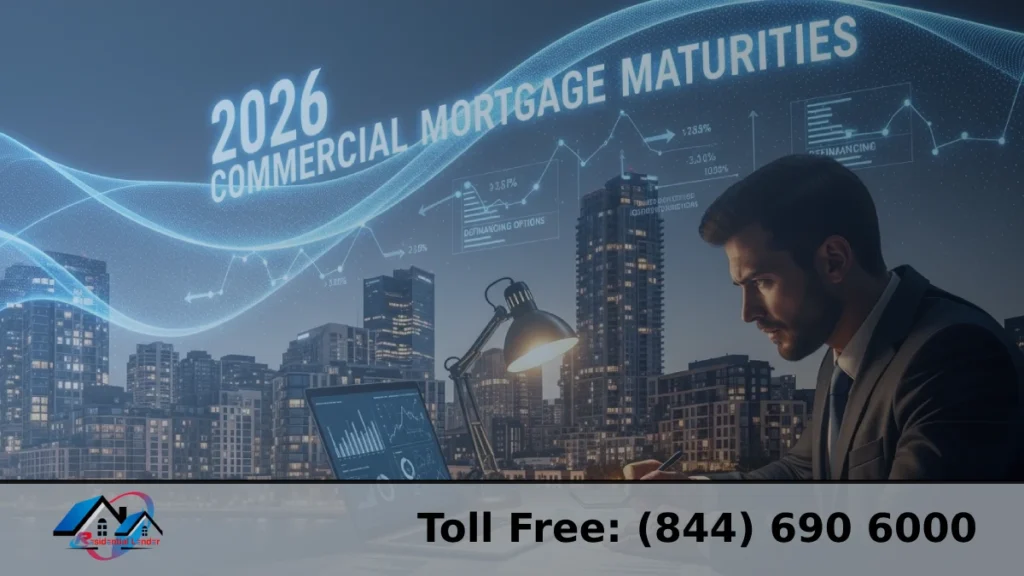
The current economic landscape is a mix of growth and record-breaking hurdles. The U.S. national debt has hit a staggering $37 trillion. While the economy shows resilience, the commercial real estate sector is uneven. Forbes recently reported that commercial lending grew by 112% year over year in late 2025, driven by the Fed’s rate cuts. However, roughly $1.5 trillion in total debt is expected to come due by the end of 2026, with nearly $936 billion of that being commercial mortgages.
If you are looking to purchase residential investment properties—like fix-and-flip, multifamily, or mixed-use assets—you need a modern framework. This guide provides the ultimate private commercial loan underwriting checklist to ensure your projects “pencil out” in today’s high-stakes environment.
Why Are 75% of Investors Updating Their Private Commercial Real Estate Loan Underwriting Checklist Today?
The “early-mover advantage” in the 2026 market is fading. Deloitte research shows that 75% of global investors plan to increase their real estate investment levels this year. Still, they are doing so with a much tighter focus on risk. In the past, you relied on rising property values (cap rate compression) to bail out a weak deal. In 2026, those days are over. Success now depends on income-driven returns and surgically precise management.
A private commercial real estate loan underwriting checklist is no longer just a list of papers. It is a strategic shield. Lenders are increasingly data-driven. They are looking at predictive analytics and even climate-risk software to gauge an asset’s long-term viability. If your checklist does not account for these modern “lender overlays,” your application may be dead on arrival.
Is Your Cash Flow Strong Enough to Survive the $936 Billion Debt Wave?
The “debt wave” is the most significant challenge in private commercial loan underwriting today. Many loans that were supposed to mature in 2024 and 2025 were extended. Now, those bills are coming due in 2026. This creates a massive demand for refinancing and restructuring.
For investors, this means fierce competition for capital. To win, you must prove that your property can handle current interest rates while maintaining a healthy “safety buffer.” Lenders are favoring “extend-and-modify” strategies to avoid distressed sales, but only for borrowers with their financial houses in order.
How to Underwrite a Private Commercial Loan: The Underwriter’s Perspective
As a correspondent lender with 30 years of history, we view underwriting as a form of “due diligence.” It is the process where we assess the “risk and readiness” of your business. If you want to know how to underwrite a private commercial loan successfully, you have to look at the “6 Cs” of credit: character, capacity, capital, collateral, conditions, and confidence.
The process begins with a deep dive into your “financial story.” Underwriters are not just looking for a high credit score; they want to see stability and the ability to survive over time. This is why your “time in business” and “steady cash flow” are so critical.
The Private Money Commercial Loan Underwriting Process
The private money commercial loan underwriting process is designed for speed, but it is not a shortcut. At ResidentialLender.Net, we leverage a network of 1,000 private lenders to move deals quickly, often providing approvals within 24 to 72 hours for non-complex files.
- Application Intake: You submit your digital application and initial “deal story.”
- Document Authentication: A specialist reviews your files for accuracy. Missing pages are the #1 cause of delays.
- Risk Analysis: The underwriter calculates your Debt-to-Income (DTI) and Debt Service Coverage Ratio (DSCR).
- Asset Validation: A third-party appraisal confirms the property value and condition.
- Funding: Legal documents are signed, and funds are disbursed.
The Essential Due Diligence Checklist for Private Commercial Loans
Before you even talk to a lender, you should have your “package” ready. An incomplete package signals a lack of professionalism. Use this due diligence checklist for private commercial loans to stay ahead:
- Business Financials: 3 years of federal tax returns and year-to-date Profit & Loss (P&L) statements.
- Personal Financials: Signed Personal Financial Statement (PFS) and 3-6 months of bank statements to prove “skin in the game”.
- Entity Documents: Articles of Incorporation, Operating Agreements, and EIN verification letters.
- Property Documents: Current rent rolls, a 12-month trailing income/expense summary, and property photos.
- The “Vision”: A clear business plan or an executive summary explaining exactly how you will use the funds and how you will repay them.
| Macroeconomic Factor (2026) | Impact on Underwriting | Recommended Strategy |
| U.S. GDP Growth: 2.0% | Slower demand growth | Focus on tenant retention |
| CRE Investment: $562B | Increased competition | Act with high conviction |
| National Debt: $37T | Inflationary pressure | Diversify portfolio risk |
| Construction Costs: +40% | Slower supply growth | Upgrade existing A/A- stock |
What to Look for in Private Commercial Loan Underwriting: Identifying Red Flags
Investors often ask what to look for in private commercial loan underwriting to avoid a rejection. Underwriters are looking for “proof of concept.” One major red flag is “commingling funds”—mixing your personal bank account with your business transactions. This instantly destroys your business’s credibility.
Another red flag is “overestimated ARV” (After-Repair Value). In 2026, active listings are unreliable because the market has shifted. Underwriters now insist on using “sold and pending” comps to ensure your exit strategy is realistic. If your numbers look “priced for perfection,” expect a quick decline.
Private Hard Money Commercial Loan Underwriting Guidelines
For fix-and-flip projects, private hard money commercial loan underwriting guidelines focus primarily on the asset. These are “asset-based” loans where the property’s value is the hero of the story. However, even in hard money, your “track record” as an investor matters. Lenders want to see that you have successfully managed similar rehabs in the past.
Typically, hard money loans offer a 58-65% Loan-to-Value (LTV) ratio. This provides the lender a safety cushion. In return, you get speed. If you need to close a deal at an auction or from a distressed seller, hard money is your best tool.
Choosing the Right Financing: Bridge Loans vs. DSCR Loans
Not every project fits a single loan type. You must match your need with the right product.
Commercial Bridge Loan Underwriting Checklist Private Lender
A bridge loan is a “temporary capital injection” used until you can stabilize a property or sell it. The commercial bridge loan underwriting checklist, private lender standards focus on your “stabilization plan.”
- Do you have a detailed rehab budget?
- Is there a clear “path to stabilization” (e.g., getting the units rented)?
- What is your exit strategy? (Refinance or Sale?).
Private Commercial Mortgage Loan Underwriting Standards for Income Properties
For stabilized, income-generating properties, the private commercial mortgage loan underwriting standards revolve around the Debt Service Coverage Ratio (DSCR). A DSCR measures the property’s ability to pay its own debt.
While a 1.0 ratio is the break-even point, most private lenders demand a 1.25 ratio. This means the property generates 25% more income than the monthly mortgage payment. In 2026, with vacancy rates peaking in some “Sun Belt” markets like Austin and Nashville, underwriters are being very conservative with “market value rent analysis”.
| Loan Type | Best For | Typical LTV | Key Requirement |
| Bridge Loan | Distressed / Quick Close | 80-90% | Clear Exit Strategy |
| DSCR Loan | Turnkey Rental | 75-80% | 1.25x Coverage |
| Hard Money | Fix-and-Flip | 58-65% | Strong Comps (ARV) |
| Conventional | Long-term Hold | Up to 80% | 2 Years Tax Returns |
Could Your Property Pass This Rigorous Credit Analysis?
The private commercial loan credit analysis checklist has evolved. In the past, a FICO score was the beginning and end of the conversation. Today, we look at “Global Cash Flow” and “Total Liquidity”.
“Cash is king” in 2026. Most lenders now require you to have 6-12 months of PITI (Principal, Interest, Taxes, and Insurance) in liquid reserves after you close the deal. This ensures that if a tenant leaves or a pipe bursts, the loan remains in “good standing.” For the self-employed, we often use “bank-statement-style” income verification, which looks at your actual cash flow rather than what is reported on a tax return.
Underwriting Private Commercial Construction Loans Checklist
Developing from the ground up? The underwriting private commercial construction loans checklist is the most demanding. Because construction carries “execution risk,” lenders are essentially underwriting your contractor as much as they are underwriting you.
- Builder Selection: Lenders want licensed and insured contractors with a proven track record.
- Equity: Expect to put down 20-30% of total project costs.
- Draw Schedule: Funds are not released all at once. They are disbursed in phases based on completed work verified by an inspector.
- Contingencies: You must have a 10-15% “contingency reserve” to handle material price spikes caused by tariffs on steel, aluminum, and copper.
Best Practices for Private Commercial Loan Underwriting and Success
After 30 years in the business, we have identified the best practices for private commercial loan underwriting that separate the professionals from the amateurs.
- Be Responsive: The faster you answer an underwriter’s question, the faster your deal moves. Silence is a deal-killer.
- Clarify the Story: If you have a dip in income or a late payment from two years ago, explain it upfront. Do not wait for the underwriter to find it and ask.
- Use a Schedule of Real Estate Owned (SREO): For investors with multiple properties, an SREO tracks your “debt wall.” It helps the underwriter see that you are not over-leveraged.
- Seek Expert Consulting: Partnering with a consultancy like ResidentialLender.Net gives you access to a “correspondent” level of service. We handle the “lender overlays” so you can focus on finding the next deal.
The Private Commercial Real Estate Debt Underwriting Process: Modern Efficiency
In 2026, “speed is a competitive advantage”. The private commercial real estate debt underwriting process has been streamlined by automation. At ResidentialLender.Net, we use modern workflows to digitize, organize, and validate document piles that used to take weeks to review. By using AI-driven site selection and “automated credit decisions,” we help our 1,000 partners deliver funding with “certainty of funding”.
Challenges in Private Commercial Loan Underwriting: The 2026 Landscape
No market is without its hurdles. Current challenges in private commercial loan underwriting include “heightened regulatory oversight.” Over 900 banks still carry commercial real estate exposure above 300% of their capital, which is very nerve-racking. This has caused banks to tighten standards, pushing more investors toward private capital.
We also see “sector concentration risk.” If you are investing in “B and C office” space, you face significant headwinds. However, “data centers” and “multifamily” remain the year’s “high conviction” sectors. Data centers, in particular, are seeing a surge in demand due to AI adoption, making them an attractive target for lenders.
The Private Lender Commercial Property Underwriting Guide for Brokers
If you are a broker—whether experienced or new—our private lender commercial property underwriting guide is your roadmap to success. We offer exclusive referral programs that allow you to tap into our 30 years of underwriting expertise.
The secret for brokers in 2026 is “situational awareness”. You must know which lenders are “risk-on” for specific assets. For example, some partners love “ground-up multifamily,” while others only want “stabilized retail” anchored by a grocery store. By partnering with us, you don’t have to guess; you gain access to the right capital source for every unique deal.
Comparing Private vs Conventional Commercial Loan Underwriting
When should you choose private over conventional? It depends on your “exit strategy” and “repayment period”. Comparing private vs conventional commercial loan underwriting reveals a clear trade-off: speed and flexibility versus cost.
- Conventional (Banks/GSEs): Offers the lowest rates (4-7%) and 30-year terms but takes 45-60 days to close and requires strict “full-doc” tax returns.
- Private (ResidentialLender.Net): Offers faster closing (24-72 hours), “lite-doc” or “no-doc” options, and flexibility on credit, but comes with higher interest rates (8-12%+) and shorter terms (1-3 years).
For a “fix-and-flip” or a “repositioning” project, private capital is the only realistic choice. For a long-term “buy-and-hold” with an already stabilized tenant, conventional is the gold standard.
Final Thoughts: Is Your Business “Creditworthy” in 2026?
The 2026 market rewards “skill, not timing”. Whether you are pursuing a USDA B&I loan, an SBA loan for your operations, or a bridge loan for a multifamily conversion, the fundamentals remain the same. You must be “ready.”
As we look toward the rest of the year, ResidentialLender.Net remains committed to your growth. With our 30 years of “underwriter” capability and a network of 1,000 private partners, we help individuals navigate the $936 billion debt wave with confidence. Don’t wait for a “perfect” market—it doesn’t exist. Instead, perfect your private commercial loan underwriting checklist and start executing.
Ready to secure your next investment? Contact us today to see how our Referral Program or our exclusive loan options can fund your 2026 vision.
FAQs
Can I use gift funds for down payments?
Yes. Most private lenders allow gift funds if you provide a signed gift letter and proof of transfer. However, some correspondent lenders require you to contribute at least 5% of your own capital to demonstrate commitment and financial stability.
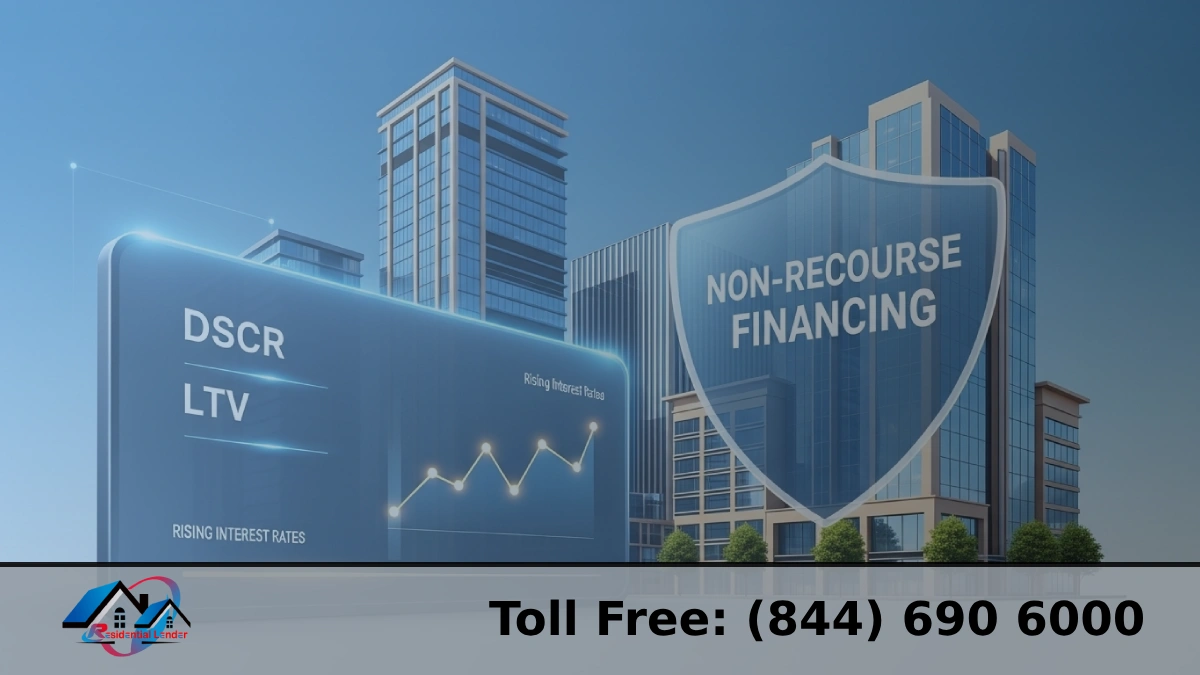
Do private lenders offer non-recourse loan options?
Yes. While many small-balance loans require a personal guarantee, larger commercial facilities or specific CMBS products often feature non-recourse structures. This protects your personal assets if the property fails, provided you avoid specific bad-boy carve-out violations during the loan term.
Can I flip houses using FHA loans?
No. FHA guidelines require you to occupy the property as your primary residence for at least one year. Additionally, you generally cannot purchase a home within ninety days of a prior sale, which specifically prevents the standard and popular fix-and-flip strategy.
Are retirement accounts eligible for cash reserves?
Yes. You can typically use 401(k) or IRA balances to meet the six-to-twelve-month reserve requirement. Most underwriters apply a 20% haircut to the vested balance to account for potential market volatility, early withdrawal penalties, and future tax obligations.
Is a virtual office address acceptable for loans?
Yes. Modern underwriting standards accept virtual offices if they include a unique suite number and live phone answering services. However, a simple P.O. Box is usually a red flag that can trigger a fraud alert or an automatic loan application rejection.