
 Google AI
 ChatGPT
 Perplexity
Almost half of all renters in the United States cannot afford their monthly rent. A shocking 49% of tenant households—about 22.7 million families—are cost-burdened. They spend more than 30% of their gross income on housing. Over 12.1 million of these households pay more than half of their income just to keep a roof over their heads. These numbers come from the latest Harvard Joint Center for Housing Studies (JCHS) report.
Worse yet, the Federal Reserve Bank of Philadelphia reports that 41% of all rental homes in America need major physical repairs. This aging housing stock requires more than $70 billion in capital repairs. At the same time, Realtor.com shows the national housing supply gap has widened to 4.03 million units. Landlords are trapped in a tight corner.
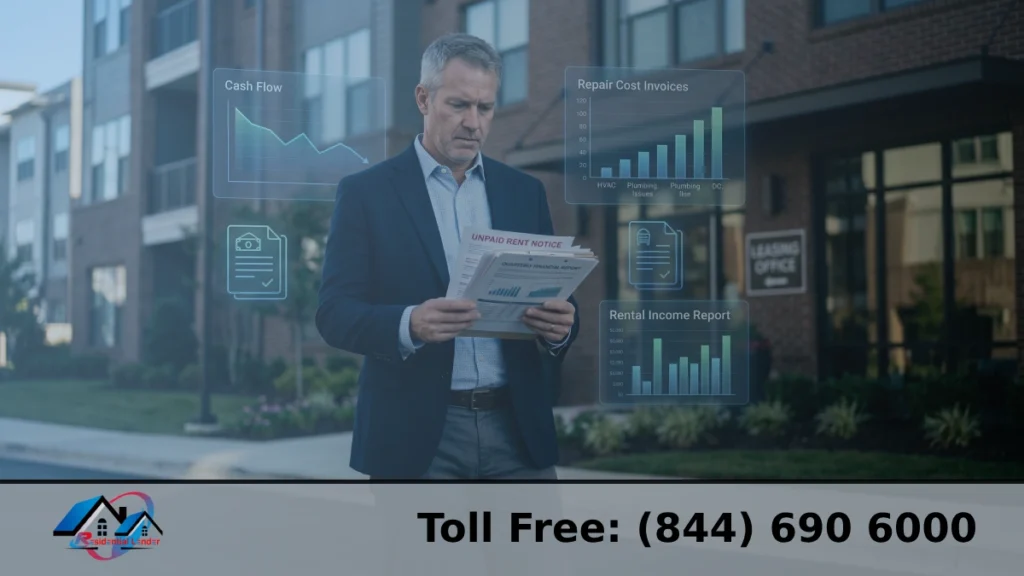
Rents actually dipped 0.6% in late 2025. Meanwhile, landlords face higher property taxes, higher insurance costs, and soaring repair costs. This creates a severe cash squeeze. It makes finding a residential rental liquidity rescue plan a top priority.
If you own rental properties, you need to know how to protect your business. You must understand your cash options. You need to keep your properties running. This guide will show you 7 powerful ways to save your rental cash flow.
Landlord Cash Squeeze:
- Flat Rents (Dipped 0.6% in late 2025)
- Rising Costs (Taxes, Insurance, Repairs)
- Renter Strain (49% are cost-burdened)
Traditional banks do not make it easy for landlords. They ask for tax returns, W-2 forms, and years of paperwork. If you write off expenses to save on taxes, your income looks low on paper. The bank sees this and rejects your loan.
Fortunately, you can look for modern solutions to the landlord liquidity crisis. Non-Qualified Mortgage (Non-QM) products are excellent tools. These loans do not care about your personal tax returns. They focus on the property’s cash flow.
ResidentialLender.Net has 30 years of underwriting experience. We help real estate investors find these alternative programs. We act as a table lender, correspondent lender, and super broker to match you with the right capital. Knowing how to solve cash flow problems in residential rentals is the first step to scaling your portfolio.
Step 1: Your Resi Rental Liquidity Rescue and Solving Rental Property Cash Crunch
When you experience a drop in rental income, you must act fast. Delaying repairs or mortgage payments will hurt your credit. It can also cause you to lose your property. You need to focus on resolving rental property cash crunches immediately.
Traditional bank loans take 60 to 90 days to close. That is too slow when you have bills to pay. You need quick financing for residential real estate investors.
- Lenders demand tax returns & personal W-2s.
- Lenders evaluate asset cash flow & property equity.
One excellent option is a stated income loan. These programs do not require years of tax filings. Lenders look at your bank statements and your property’s value rather than your credit score. This keeps the process simple and private.
You can also use a cash advance for future rental income. This product lets you receive a lump-sum cash payment today. In return, you agree to pay it back using a portion of your future rent checks. This provides an instant cash injection to cover emergency costs.
If your property has increased in value, you can also consider a cash-out refinance. This allows you to withdraw cash from your property’s equity. You can use this cash to make repairs, pay off debt, or buy more properties. Minimal paperwork options make this cash-out process much faster.
Step 2: Can Bridge Loans for Residential Rental Properties Save Your Near-Term Assets?
In a fast real estate market, you have to move quickly. If you find a great deal on a property, you cannot wait months for a loan. You need to secure the asset before another buyer takes it.
This is where bridge loans for residential rental properties become essential. These are short-term loans designed to bridge the gap between transactions. They give you the cash you need to buy or repair a property quickly.
Short-Term Bridge Loan:
- Term: 3 to 36 months
- Payments: Often interest-only to save cash
- Exit: Refinance into a permanent loan or sell the asset
These short-term loans usually last from 3 to 36 months. They often feature interest-only payments. This keeps your monthly costs low while you work on the property. Once the property is stable, you can refinance it into a long-term mortgage.
ResidentialLender.Net operates as a correspondent and table lender. This means we can fund loans quickly. We do not have to wait for traditional bank approvals. We analyze the equity in your property to get you the cash you need in as little as two weeks.
Step 3: FHA Programs and Emergency Funding for Rental Property Owners
Private capital is not your only option. You can also look at government-backed programs. These programs can offer excellent emergency funding for rental property owners.
Since the average rental property in the U.S. is now 45 years old, many buildings need work. Old buildings are expensive to maintain. They are also more vulnerable to climate disasters.
National Rental Property Status:
- Median Age: 45 years old
- Units needing repairs: 41%
- Total repair cost: $70+ Billion
If you are an owner-occupant, you can use an FHA 203(k) loan. This program lets you buy a 2-to-4-unit property and finance the repairs in one single mortgage. You only need a 3.5% down payment if your credit score is 580 or higher. You can even use the future rental income of the other units to qualify for the loan.
For larger multifamily buildings with 5 or more units, you can use the FHA Section 221(d)(4) or Section 223(f) programs.
- Section 221(d)(4): This is for new construction or major renovations. It offers high leverage up to 85% or 90% of your costs. It also features a fixed rate that rolls into a 40-year permanent mortgage.
- Section 223(f): This is for refinancing or purchasing existing properties. It allows cash-out refinances up to 80% loan-to-value (LTV). It also offers long amortization terms up to 35 years.
These programs take longer to close, but they offer very low rates. They are also non-recourse. This means the lender cannot go after your personal assets if the loan defaults.
Step 4: How Do You Prevent Rental Income Gaps for Landlords with Smart Screening?
The best way to handle a cash flow crisis is to prevent it from happening. A vacant property is a direct cash drain. You still have to pay the mortgage, taxes, and utilities, but you have no income. You must learn how to prevent rental income gaps for landlords.
To keep your units full, you need fast cash solutions for landlords with vacant properties. Try these operational strategies to speed up your leasing process:
- Market Early: Start advertising your property the moment your current tenant gives notice. Do not wait for them to move out.
- Use Professional Photos: Clean, bright listings with good photos attract renters much faster.
- Price Smartly: Price your rental slightly below the highest market rate. This attracts a wider pool of qualified applicants. It also helps retain tenants, reducing turnover costs.
- Automate Collection: Let tenants pay online. Online systems can send automatic reminders and accept ACH payments. This reduces late payments.
- Add Low-Cost Upgrades: Fresh paint and new fixtures make a great first impression without breaking the bank.
Screening Checklist:
- Check national eviction databases
- Verify steady employment via pay stubs
- Call former landlords for references
- Report rent payments to credit bureaus to motivate tenants
In a softer rental market, screening is critical. Many applicants look good on paper but carry hidden financial risks. You must run thorough background checks.
A TransUnion study shows that 80% of renters are more motivated to pay on time if their landlord reports those payments to credit bureaus. VantageScore also found that adding rent history to credit reports improves the predictability of default risk by 11%. Use these tools to protect your cash flow.
Step 5: Can Alternatives to Evicting Tenants for Non-Payment Stabilize Your Yield?
When a tenant stops paying rent, your first instinct might be to evict them. Eviction is a slow, painful, and expensive process. It can take months and cost thousands of dollars in legal fees. Plus, angry tenants might damage your property on the way out.
Smart landlords look for alternatives to evicting tenants for non-payment. You can offer support for landlords facing tenant non-payment by using structured workout agreements. Here are the best ways to negotiate with a struggling tenant:
| Strategic Workout Options | How It Works | Cash Flow Benefit |
| Rent Deferral | Defer a portion of the rent for a few months. Amortize the missed amount over the rest of the lease. | Keeps the tenant in place and secures future repayment. |
| Abatement | Forgive one month of rent if the tenant promises to stay on track for the rest of the year. | Helps the tenant catch up and avoids costly legal bills. |
| Deposit Allocation | Apply the security deposit to cover the back rent. Agree on a plan to replenish the deposit over time. | Resolves the immediate default without losing the tenant. |
| Lease Extension | Grant short-term rent relief in exchange for a longer lease at a slightly higher future rate. | Guarantees long-term occupancy and recovers your cash on the back end. |
Always put these agreements in writing. Use a formal lease amendment. This protects your legal rights while giving your tenant a realistic way to pay.
Step 6: What Rental Arrears Financial Assistance Exists for Property Managers?
If you face a long-term non-payment issue, look for local financial aid programs. You can find financial assistance for rental arrears for property managers and landlords through government and non-profit channels.
Contact 2-1-1 or visit your local housing authority. Many cities have local emergency funds designed to keep tenants housed. Some of these programs pay landlords directly to cover past-due rent.
Non-QM Debt Coverage Evaluation:
- DSCR = Net Operating Income / Monthly PITIA Mortgage Payment
- Ratio >= 1.25: Excellent terms and maximum leverage
- No personal tax returns or DTI checks required
To build long-term stability, you should also look at Debt Service Coverage Ratio (DSCR) loans. These loans do not check your personal debt-to-income (DTI) ratio. Instead, they use a simple math equation:
DSCR} = {Net Operating Income (NOI)}\{PITIA Monthly Debt Obligations}
If your property’s rental income covers the mortgage payment, property taxes, insurance, and HOA fees, your loan gets approved.
This is a game-changer for active investors. It allows you to scale your business and buy multiple properties without traditional paperwork roadblocks.
These flexible programs work for single-family rentals, multifamily assets, and mixed-use buildings. ResidentialLender.Net specializes in structuring these programs to keep your investments secure.
Step 7: How Do You Improve Rental Property Cash Flow Management?
Running a successful rental business requires constant discipline. You cannot wait for a crisis to manage your money. You need to improve cash flow management for rental properties during good times.
Implement these proactive strategies to mitigate rental market liquidity risk :
- Establish a Capital Reserve: Never spend all your monthly profit. Set aside 5% to 10% of your gross rental income into a separate cash account. This money is your emergency fund. Use it for major repairs or during unexpected vacancies.
- Partner with Local Programs: Many local non-profits offer financial incentives to landlords. These programs can offer sign-on bonuses, vacancy payments, and risk-mitigation funds.
- Minimize Operating Expenses: Review your vendors regularly. Negotiate better rates for landscaping, trash pickup, and maintenance.
- Analyze Your Yields: Use standard financial calculations to check your portfolio’s health.
Cap Rate = {Net Operating Income}\{Property Value}* 100
DSCR = {Net Operating Income}\{Annual PITIA Debt Service}
Keeping track of these metrics ensures that your properties remain profitable and resilient during market shifts.
Conclusion: Best Practices for Landlord Financial Stability
The rental housing sector is moving fast. To survive a volatile market, you must be proactive, quick, and adaptable.
Managing a real estate portfolio requires a reliable resi rental liquidity rescue plan. You must implement best practices for landlord financial stability. This means carefully screening your tenants, building cash reserves, and using flexible financing options.
Lending Options Menu:
- Bridge & Hard Money Loans (Fast, short-term cash)
- DSCR & Lite-Doc Loans (Qualify based on asset income)
- FHA Rehab & Multifamily Loans (Long-term, low rates)
- Stated Income & No-Doc Programs (No tax returns required)
ResidentialLender.Net is here to help you navigate these options. We have 30 years of underwriting experience. We understand the unique challenges that landlords face.
Whether you need a quick bridge loan, a flexible DSCR loan, or a government-backed multifamily program, we can help you structure the right transaction. We also offer exclusive and non-exclusive referral programs for brokers of all experience levels.
Do not let a temporary cash squeeze threaten your hard work. Contact the consulting team at ResidentialLender.Net to protect your rental cash flow today.
FAQs
Can you switch bridge loans to mortgages?
Yes. Many real estate investors use short-term bridge financing to quickly secure properties. They plan to transition to a permanent mortgage once the rental asset stabilizes, a common and highly effective strategy.
Do bridge loans charge early repayment penalties?
No. Most lenders do not charge a fee if you pay off the debt early, especially after three months. You should always review your specific contract terms carefully to understand any potential costs before finalizing your transaction.
Do alternative documentation loans have higher rates?
Yes. These loans carry higher interest rates compared to traditional mortgages because they require less documentation. Lenders take on more risk by skipping tax returns, so they charge higher fees to offset their financial exposure.
Are residential bridge loans interest-only?
Yes. These short-term programs typically require only monthly interest payments during the active term. This helps property investors maintain strong cash flow and reduce overhead costs. At the same time, they prepare to sell or refinance the property.
Do DSCR loans require personal tax returns?
No. These alternative programs do not require tax returns or W-2 documents to qualify. Instead, lenders evaluate the property’s rental income against its monthly debt service to determine whether the asset generates sufficient cash flow.